Showing posts with label Siemens Combustion Controls. Show all posts

Ensuring Reliable Fuel Monitoring with the QPx32 Gas Pressure Switch

Ensuring Reliable Fuel Monitoring with the QPx32 Gas Pressure Switch

Overview 

The Siemens Combustion Controls (SCC) QPx32 series pressure switch is a compact, reliable device that monitors gas or air pressure in combustion systems and HVAC applications. It detects when pressure rises above or below a set threshold and then actuates an internal Form C (SPDT) contact to alert control systems or shut down equipment if needed. In practical terms, the QPx32 safeguards burners, boilers, and other gas-fired or air-handling equipment by signaling unsafe pressure conditions. It is compatible with many fuels and gases – including natural gas, propane, butane, hydrogen, biogas, and air – making it versatile for many commercial and industrial settings. Overall, the QPx32 pressure switch helps maintain critical pressure levels, protecting both equipment and safety. 

Features and Benefits 

The QPx32 pressure switch family offers numerous features focused on safety, versatility, and ease of use. All models are cULus (UL 353) listed and FM-approved for common combustible gases, which means they meet rigorous safety standards for the U.S. and Canada. They are built to handle various fuel types – not only standard gases like natural gas and propane but also hydrogen or blended hydrogen fuels – reflecting a forward-looking design for emerging energy sources. Automatic-reset and manual-reset versions are available, allowing users to choose a configuration that suits their application’s safety requirements. A manual-reset model must be physically reset after a trip (ideal for critical safety interlocks that demand human inspection). In contrast, an automatic reset model will restore once the pressure returns to an acceptable range. Each switch is housed in a robust NEMA 4-rated enclosure, which is dust-tight and watertight for dependable outdoor or wash-down area operation. Most QPx32 units are designed to operate in ambient temperatures from -40°F to 140°F (-40°C to 60°C) without issue, ensuring functionality in harsh winter conditions or hot mechanical rooms alike.  

In addition to safety approvals, the QPx32 series incorporates practical features that simplify installation and maintenance. For example, there is a built-in test connection on the side of each switch, which allows technicians to easily attach a manometer or pressure gauge to verify the pressure or test the setpoint calibration. This eliminates the need for extra T-fittings or special test adapters during routine system checks. The electrical hookup is also straightforward: a standard 1/2-inch conduit fitting can be attached directly to the switch body without any adapters, making wiring installation quick and secure. Internally, the switch’s contact mechanism uses gold-plated contacts over a silver alloy base to ensure reliable electrical performance. The gold plating prevents oxidation and guarantees that even very low current signals (for example, from modern electronic controllers) will register consistently. From a pressure handling perspective, the QPx32 can withstand up to 15 psig (1 bar) of inlet pressure on its sensing port. Notably, it is designed for ventless operation up to 7 psig, meaning that under normal operating pressures, it will not bleed gas to the atmosphere. This ventless design enhances safety (no continuous gas venting) and simplifies compliance since no vent line or vent limiter is required for pressures at or below 7 psi. All these features contribute to a pressure switch that is convenient to use, durable, and aligned with safety best practices. 

Applications 

SCC’s QPx32 series is used across various commercial and industrial applications for gas and air pressure monitoring, particularly in burner management and HVAC systems. A QPx32 switch often monitors the fuel gas supply pressure in gas-fired burners, boilers, and furnaces. It will trip if the pressure is too low or too high, preventing unsafe combustion conditions like flameouts or over-pressurization. One everyday use is in valve proving systems: before a burner ignites, the control system may close off the gas line and use a QPx32 automatic reset switch to verify that line pressure holds steady. If the pressure falls when it shouldn’t, it indicates a leaking safety shutoff valve and the QPx32 will detect this drop and help lock out the system. In this way, the switch acts as a crucial safety check to ensure gas valves seal properly before ignition. The QPx32 is also an air pressure-producing switch on blowers and ventilation fans. For example, on a combustion air blower or an HVAC supply fan, the switch can confirm that airflow is present by sensing the pressure created in the airflow. Should a fan fail to start or a duct get blocked, the pressure will not reach the switch’s setpoint, and the QPx32 will prevent the burner from firing or shutting down the process, averting potential hazards. 

Another important application of the QPx32 series is in differential pressure monitoring. The device has a vent port that can be used as a reference port, allowing it to measure the difference between two pressure points. By connecting the vent port to a secondary location, the QPx32 can serve as a differential air pressure switch. This is useful in scenarios like monitoring filter health in an air handling unit (where the switch measures pressure drop across the filter) or proving flow in exhaust and recirculation fan systems. For instance, in an exhaust fan system, the QPx32 might sense the slight vacuum in the flue or stack when the fan is running. If the exhaust fan stops and that vacuum disappears, the switch will drop out and signal a fault condition – preventing continued operation without proper ventilation. Similarly, in a recirculation or building pressurization system, the QPx32 can verify that a fan maintains the required airflow or pressure differential between spaces. Thanks to its reliability and versatility, the QPx32 series is used as a critical safety interlock in all these applications, helping to ensure that processes only run under the correct pressure conditions. 

Competitive Analysis 

Through several key advantages, the QPx32 series distinguishes itself from competing gas pressure switches offered by companies like Dungs and Honeywell (Kromschröder). One standout feature is its ventless operation capability: unlike many traditional pressure switches requiring a vent or vent limiter to release gas from the sensing chamber safely, the QPx32 does not need to vent gas to the atmosphere at settings up to 7 psi. Competing models often must be connected to a vent line or incorporate a vent-limiting device to comply with safety codes, which adds complexity to the installation. By engineering the QPx32 to be essentially gas-tight in everyday use, SCC has simplified installation and eliminated a potential source of gas leakage. This ventless design means no continuous bleed of gas – a significant safety and cost consideration, especially for indoor installations where venting gas is undesirable. It also reduces maintenance and inspection requirements associated with vent line routing or clogging. 

Another competitive advantage of the QPx32 is that it includes the integrated test connection on every unit. This built-in test port sets the QPx32 apart from some Dungs and Kromschröder pressure switches, which may require additional adapters or external ports to perform setpoint checks. With the QPx32, a technician can quickly attach a gauge or manometer to the switch to verify pressures or troubleshoot, saving time during commissioning and routine service. Regarding pricing, the Siemens (SCC) QPx32 series is generally cost-competitive with these rival products, often providing a more affordable option for equivalent performance. Users benefit from Siemens’ quality and engineering – such as the gold-plated contacts for reliability and the NEMA 4 weatherproof housing – at a price point that can be very attractive compared to imported European switches. Overall, when stacked against similar offerings from Dungs or Honeywell/Kromschröder, the QPx32 series delivers ventless safety, convenient testing features, and firm value without sacrificing the technical capabilities required for modern combustion control systems. 

Technical Specifications 

The QPx32 series encompasses a range of models covering various pressure setpoint spans and configurations. Available setpoint pressure ranges extend from as low as about 0.2″ WC (inches of water column) up to 200″ WC, which is approximately 7.3 psi. This wide range means a single product family can handle very slight pressures (for example, detecting a tiny air flow or draft) and relatively higher pressures encountered in fuel gas lines. All QPx32 variants share a maximum operating pressure of 15 psig (1 bar), so they can safely withstand surges or over-pressure up to that limit without damage. The switches are compact and lightweight (weighing roughly 8 ounces, with a die-cast aluminum lower body and a clear polycarbonate cover that allows a view of the internal setpoint dial. 

Each model is equipped with a 1/4″ NPT pressure inlet port on the bottom (the “+” port) and a secondary 1/8″ NPT port that can serve as a vent or negative (-) pressure connection for differential measurements. The electrical conduit connection is a threaded 1/2″ NPSM hub on the side, accommodating standard 1/2″ flexible conduit fittings. Installation is flexible: the QPx32 can be mounted in any orientation except upside-down (inversion is not allowed). For best accuracy, the manufacturer recommends mounting with the diaphragm vertical since a horizontal orientation can cause a minor shift in the switching point due to gravity. In practice, the unit can be installed on piping or panels at convenient angles without issue, but one should avoid mounting it with the cover facing downwards. No special brackets are needed as the device typically threads directly onto a 1/4″ pipe nipple at the sensing point; wrench flats are provided on the base to assist in tightening. 

The QPx32 uses a snap-action SPDT switch internally to change state when the pressure threshold is crossed. Its electrical ratings support a wide range of control systems: the contact can handle up to 8 A of resistive load on 24–125 VAC circuits, and it is also rated for DC control voltages (up to 48 VDC, switching up to 100 mA). The gold-plated contact design makes the switch reliable even at very low currents (down to 20 mA), essential for direct interface with electronic burner control units or PLC input cards. The QPx32 series meets UL 353 and FM 3510 standards for safety shutoff devices and is CSA certified, ensuring it complies with relevant electrical and fuel gas codes. In terms of longevity, the mechanical life of the pressure switch is excellent: the automatic reset models are endurance-tested to over 100,000 cycles, and the manual reset versions exceed 6,000 cycles of operation at the full load rating. This durability is well above the demands of typical service, meaning the device will perform reliably through many years of regular use. Overall, the technical specifications of the Siemens SCC QPx32 pressure switch underscore its capability to operate over a broad range of conditions while delivering safe, accurate, and repeatable performance in critical pressure monitoring applications.

Combustion Technology, LLC
http://combustion-tech.net
800-327-1831

Siemens Combustion Controls HFV Series Control Valves for Feedwater and Steam Flow

Siemens Combustion Controls HFV Series Control Valves for Feedwater and Steam Flow

Control valves are critical in regulating boiler operations, especially in managing feedwater and steam flow. The Siemens Combustion Controls HFV Series is a prime example of advanced technology in this field. These valves demonstrate the sophistication and precision necessary for effectively controlling boiler systems in various industrial settings.

The primary function of control valves in boiler systems is to regulate the flow of feedwater and steam. In the case of boiler feedwater applications, these valves maintain the correct water level, ensuring that the boiler operates safely and efficiently. With its precision engineering, the Siemens HFV Series ensures a steady and controlled feedwater flow. This precision is crucial because an imbalance in water levels can lead to issues like low water cutoffs or boiler flooding, which can cause operational inefficiencies and safety hazards.

In boiler steam flow applications, control valves like the Siemens HFV Series manage the flow and pressure of the steam exiting the boiler. Steam is the primary output of boilers used for various purposes, including heating, power generation, and process applications. The ability of the HFV Series to control steam flow accurately is vital for maintaining the desired pressure and temperature, which are critical parameters for the efficiency and safety of the boiler system.

One of the key advantages of the Siemens HFV Series in these applications is its responsiveness. The HFV valves can adjust quickly to changes in demand or operating conditions. This responsiveness ensures the boiler system adapts rapidly, maintaining optimal performance even under varying load conditions. For instance, in the case of increased steam demand, the HFV valves can open further to allow more steam to flow, thereby meeting the demand without causing a drop in pressure or temperature.

Another critical aspect of the HFV Series is its durability and reliability. Boiler systems operate in harsh environments, and the control valves are subject to significant wear and tear. The HFV Series withstands these conditions, ensuring long-term operational stability with minimal maintenance requirements. This durability not only reduces the cost of ownership but also minimizes downtime, a crucial factor in industries where continuous operation is paramount.
In addition to these functional benefits, the Siemens HFV Series incorporates advanced features such as diagnostic capabilities and integration with digital control systems. These features allow for real-time monitoring and adjustment of the valves, further enhancing the efficiency and safety of boiler operations. The integration with control systems enables automated adjustments based on predefined parameters, reducing the need for manual intervention and the potential for human error.

Control valves like the Siemens Combustion Controls HFV Series are essential components in boiler systems, particularly in managing boiler feedwater and steam flow. These valves ensure efficient and safe operation by maintaining optimal water levels and controlling steam flow and pressure. The HFV Series stands out for its responsiveness, durability, and advanced features, making it a top choice for industrial applications where precision and reliability are critical. By incorporating such sophisticated control solutions, industries can achieve greater operational efficiency, safety, and cost-effectiveness in their boiler operations.

Combustion Technology, LLC
800-327-1831
https://combustion-tech.net

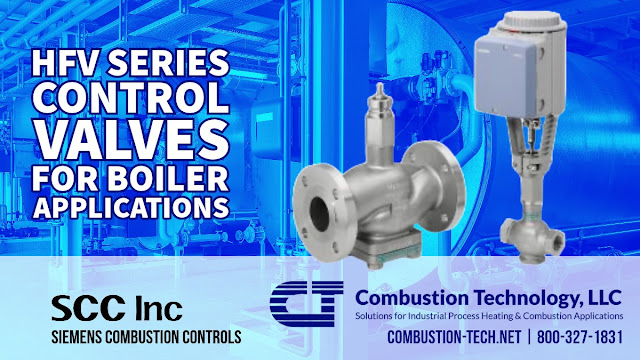
The Perfect Fit: Siemens Combustion Controls HFV Series Control Valves for Boiler Applications

The Perfect Fit: Siemens Combustion Controls HFV Series Control Valves for Boiler Applications

Modulating control valves plays a crucial role in managing the flow of feedwater and steam in a combustion boiler system. These valves help maintain the desired levels of water and steam within the boiler by continuously adjusting the flow rates according to the system's needs.
  • Feedwater Flow Control: The feedwater, which is water fed into the boiler for conversion into steam, must be carefully controlled. A modulating control valve regulates feedwater flow into the boiler, which is critical because the amount of feedwater entering the boiler should match the steam demand from the process. If the feedwater supply is too low, the boiler can run dry, causing damage to the boiler tubes and other components. Conversely, the feedwater supply is too high, which can cause overfilling and unnecessary pressure on the boiler.
  • Steam Flow Control: The steam generated in the boiler provides various processes like heating, power generation, etc. The modulating control valve regulates the steam flow from the boiler to the process. It adjusts the steam flow rate according to the process requirements, ensuring the process receives the correct amount of steam at the required pressure and temperature.
The operation of modulating control valves is typically automated, controlled by a control system that continuously monitors various parameters like boiler pressure, steam demand, water level, etc., and adjusts the valve position accordingly, ensuring optimal boiler operation, energy efficiency, and safety.

In summary, modulating control valves plays a crucial role in regulating the flow of feedwater into the combustion boiler and the steam flow from the boiler to the process. Proper operation of these valves is essential for the efficient and safe operation of the boiler system.

The Siemens Combustion Controls HFV series control valves are ideally suited for applications that involve the throttling and shutting off water or steam flow in boiler feedwater or steam flow systems. These valves operate using a Siemens SKB/C/D electronic actuator. The HFV control valves are available in a variety of sizes, ranging from 1/2" to 2" NPT (National Pipe Thread) and 1/2" to 4" flanged, with pressure ratings of either 150# or 300#.

HFV Series Control Valve Features

  • Up to 150 psi differential across the valve when modulating.
  • High close-off pressure.
  • Stainless steel body, stem, and plug.
  • Linear or equal percentage flow characteristic.
  • ANSI Class IV shutoff.
  • Fail closed.
Combustion Technology, LLC
800-327-1831
https://combustion-tech.net

Wiring the Siemens Combustion Controls SQM4 Synchro for 4-20 mA Modulation


This video explains the simple wiring of the most common SQM4 Synchro actuator from Siemens Combustion Controls.  The "5" board (SQM4x.x5x...) is used with a 4-20mA signal and offers a fantastic alternative to outdated MODulating actuators.

The Siemens SQM4 Synchro is a cost effective modulating actuator with up to 160 in-lbs and 12 or 25 second drive times for 90 degrees. The SQM4 Synchro is suited for driving oil pressure controller, butterfly valves, dampers or for use on other applications that require rotary motion.

SQM4 SYNCHRO FEATURES

  • NEMA 4 – No need for weather shields
  • No restrictions on mounting orientation – No more elaborate linkages to keep the shaft horizontal!
  • The modulating input versions accept 2-10 Vdc, 4-20 mA or 0-135 ohm control signals
Areas of application are oil and gas burners of medium to higher capacity as well as
thermal process plants.

For more information contact Combustion Tech. Call 800-327-1831 or visit https://combustion-tech.net.

The Siemens Combustion Controls LFS1 Flame Detection Switch


The Siemens LFS1 flame switch works in conjunction with a PLC. When the PLC operates as the combustion safeguard, it powers the shutdown valves, perform burner sequencing, monitors interlocks, and controls purging. The LFS1 flame switch communicates the existence of a flame to the PLC through a contact closure. The LFS1's small form conserves valuable panel space.

Flame safeguards have many names. We'll oversimplify and group all of these names to make a point. These names imply a stand-alone device detecting flame, energizing the shutoff valves, monitoring interlocks, and conducting purge. A flame switch is simply a contact. The contact closes when a flame is present and opens when a flame is not present. This opening and closing of the contact let the PLC know the presence of the flame. That's it. The sequencing, powering of the shutoff valves, monitoring, and conducting purge are all done in the PLC. The heart of the flame switch is the FR1 contact closing between terminals 11 and 12. The contact is normally open and closes upon the presence of the flame. The LFS1 takes on the liability of proving the presence of the flame, so the PLC doesn't have to. HR1 contact is an auxiliary contact used for other Siemens products. For a PLC application, SCC instructs to keep the power on terminal 6, resulting in HR1 being closed all the time. 

NFPA 86 has criteria for the PLC to be combustion safety. Combustion safety here means the sequencing, powering shutoff valves, and conducting purge. There are two avenues for the PLCs to be the combustion safety: 1) listed for combustion service and 2) not listed for combustion service. The listed PLC is straightforward and designed for combustion safety. The non-listed PLC to be used for combustion safety must meet the criteria of section 8.4.2 in NFPA 86. Third-party certified SIL-2 and restricted access are a few of the requirements for a non-listed PLC. If the PLC is the combustion safety, all you need is the LFS1 flame switch. 

Panel space is premium. The LFS1 flame switch is a compact device being 3.5 inches wide and 2.5 inches tall. The small footprint saves on space, especially for multi-burner applications. A mounting base goes with the LFS1, making it 2.5 inches deep. 

The LFS1 can report the flame signal strength via a 0-10VDC output, making it helpful to display flame signal strength for the service technician or the operator. The LFS1 can condition the relationship between the microamp flame signal and the 0 to 10VDC signal.

The LFS1 has global approvals, most recently North American approvals of UL, FM, and CSA. The LFS1 is also SIL-3 capable.

For more information about Siemens Combustion Control products in the Pacific Northwest, contact Combustion Technology, LLC. Call 800-327-1831 or visit https://combustion-tech.net.

Improved Safety and Performance with Direct Coupled Gas Valve/Actuator Assemblies

Historically linkages are more common than direct coupled actuators. Control actuators were usually foot-mounted. A foot-mounted actuator has the mounting surface on the bottom and the drive shaft coming out the side. This arrangement invites linkage-type control. An example is a four-bar linkage. If any of these bar lengths are changed, it will affect the range and characteristics of the control valve. There are usually six security points in this configuration: actuator to crank arm, crank arm to swivel head, swivel head to linkage rod, and then double all of those for the valve side.

The actuator secured to the valve is critical to safe operation. The actuator becoming disengaged from the control valve is a significant safety concern. There is confidence in the crank arms' security and is considered a positive connection. The swivel heads are less secure. Typically the swivel head is clamped or presses a set screw into the linkage rod. Under conditions of vibration or varied temperature causing expansion and contraction, these connections come loose.  Because of this hazard with linkage, you'll occasionally see a position switch connected directly to the valve to verify the valve position.

Because the connections of a linkage are not rigid, there is a problem with hysteresis. The least rigid connections are the swivel connections. The actuator will push on the swivel head when driving open and pull on the swivel head when driving closed. There will be two different valve positions based on the direction hysteresis is created for a given control signal. Why is this important? Hysteresis hurts emissions efficiency and temperature control.

More recent control actuator designs are face-mounted. These newer designs make the mounting surface and the drive shaft on the same plane with the mounting face actuator shaft and valve shaft in line. Direct coupling the actuator to the valve is an improved design. 

For direct-coupled control, the stroke of the actuator equals the stroke of the valve. To adjust the stroke of the actuator, change the cams located under the cover to limit the stroke. The concept of cam adjustments in the actuator is commonplace for a direct-coupled arrangement.

There are just two secure connection points with direct-coupled: actuator to coupling and coupling to the valve. When done correctly, both of these points are positive connections. The machining of the actuator side of the coupling is commonly an irregular shape that doesn't allow the actuator shaft to rotate inside the coupling. On the valve side, a pin bolt goes through the coupling and the valve shaft. You can be more confident in a secure connection with a direct-coupled arrangement.

The inline connection of the actuator driveshaft and the valve shaft with a positively connected coupling eliminates linkage hysteresis. The coupling is a rigid piece that directly transfers the actuator movement to the valve movement, providing precise control which assists emissions requirements, optimizes efficiency, and facilitates high-performance temperature control.

Combustion Technology, LLC
https://combustion-tech.net
800.327.1831 

The Siemens Combustion Controls SQM4 Synchro Modulating Actuator

The SQM40/SQM41 actuators are suited for driving oil pressure controller, butterfly valves, dampers or for use on other applications that require rotary motion.

The actuators are used primarily for load-dependent control of the flow of gas, oil and combustion air in connection with modulating 3-position controllers or continuous controllers (4-20 mA) and/or directly by burner controls.

The Siemens SQM4 series actuator is great for modulating air and fuel valves. it can also be mounted to a linkage for multiple control points. the resolution on this on this actuator is over 100 steps. this resolution is three times the leading competitor. this resolution is helpful to hone in on the desired set point with precision, rather than hunting or oscillating. this actuator comes in three torque settings: 45 inch pounds; 90 inch pounds; or 160 inch pounds. this actuator is NEMA 4. there is a gasket around the cover and the shaft is sealed to make it entirely NEMA 4. high fire and low fire conditions are simply set by turning these cams. 

The SCC SQM4 actuator has low voltage terminals and high voltage terminals. the low voltage is helpful for analog signals such as 4-20 mA, 0-135 ohm, and 2-10 volt DC. the high voltage terminals are for your line voltages for the actuator to modulate according to the analog signal voltage. 

The SQM4 series actuator is in stock for a common lead time of one to two days. this actuator can be direct coupled to a control valve for air or fuel control, or we also with couplings, crank arms and brackets to mount the actuator for your needs. 

Areas of application are oil and gas burners of medium to higher capacity as well as thermal process plants.

For more information in the Pacific Northwest, contact Combustion Technology. Call them at 800-327-1831 or visit their website at https://combustion-tech.net.

The Siemens SKP25 Combination Safety Shutoff Valve and Regulator

The Siemens SKP25 controls the burner manifold gas pressure according to a fixed setpoint. The SKP25 can also be applied as a 1:1 air/gas proportionator or zero governor. 

  • Safety shut‐off function and pressure regulating function in one compact unit.
  • Applicable as 1:1 air/gas proportionator or zero governor.
  • Accurate pressure control characteristics, and zero offset (drop).
  • Integral regulation leak limiter.
  • Excellent tracking characteristic

Combustion Technology, LLC
https://combustion-tech.net
800.327.1831 

Procedure for Changing the Shaft on a Siemens Combustion Controls SQM5 Actuator

Watch this video to see how easy it is to change or replace the shaft in a Semens SQM5 actuator. 

The Siemens SQM5 reversing actuators are used for the positioning of flow control valves, butterfly valves, dampers, or any application requiring rotary motion. The SQM5 actuators accommodate control input signals of 4 to 20 mA, 0 to 135 Ω, 0 to 10 Vdc, 0 to 20 mA, position proportional and floating control. The available output signals include 4 to 20 mA, 0 to 135 Ω, 0 to 10 Vdc, 0 to 20 mA, and 0 to 1000 Ω. SQM5 actuators are available with up to six internal, easily adjustable switches.

For more information about the Siemens SQM5, contact Combustion Technology, LLC. Call them at 800-327-1831 or visit this web page - https://combustion-tech.net/article_89_The-SQM5-Actuator.cfm.


Siemens Combustion Controls LMV5 Linkageless Burner Management System

The Siemens Combustion Controls LMV5 Linkageless Burner Management System delivers a fully integrated system that is easy to install and commission and provides improved burner performance, efficiency, accuracy, and safe operation.

LMV5 features:

  • Integrated linkageless control, burner flame safeguard and modulation PID control
  • Single and dual-fuel applications
  • Controls up to six independent actuators for optimal efficiency in low NOx burner applications
  • Integrated PID Temperature/Pressure Controller with auto tune for extremely accurate process control
  • VFD control with actual motor RPM speed sensor provides reliable, efficient and safe control of the combustion air blower
  • Integrated gas valve proving system checks for leaks on every burner cycle for increased safety
  • Up to 15 programmable points for each fuel-air ratio curve providing greater flexibility and tighter control
  • 900 highly repeatable actuator positions for precise control
  • Digital positioning feedback from actuators ensure unmatched repeatability
  • Independent ignition position provides reliable light off
  • Annunciation of over 500 fault conditions permits quick, accurate troubleshooting
  • World-wide approvals and technical support
  • Optional O2 Trim for Standard (LMV52.2) and
  • Ultra-Low NOx (LMV52.4) burner applications
  • Optional Flue Gas Recirculation Hold based on Stack Temperature/Time for reliable light off and burner operation
  • Adjustable Flame Failure Response Time

For more information about Siemens Combustion Controls in the Pacific Northwest, contact Combustion Technology, LLC. Call them at 800-327-1831 or visit their website at https://combustion-tech.net.

Changing Operating Parameters for the Siemens Combustion Controls LME7 and LMV3 Using the AZL Remote Display


This video instructs the viewer on how to change the operating parameters for the Siemens Combustion Controls LME7 and LMV3 using the AZL remote display.

The Siemens Combustion Controls LME7

An easy to install, easy to program, and easy to commission burner control system. It is ideally suited for use in industrial thermal process applications. The LME7 offers flexibility not found in competitive burner control units, a statement  supported by the following features:
  • Accepts standard UV, self-check UV, or self-check IR scanners and/or flame rods
  • Integral LED display
  • Programmable purge times and safety times
  • Programmable actuator positions for purge, ignition, and low fire
  • Adjustable time overlap of spark ignition and pilot valve
  • Adjustable time overlap of pilot and main gas valves
  • Proof-of-closure (POC) switch monitoring
  • Modbus RTU or BACnet MS/TP communication
  • Optional gas valve proving function
  • Password-protected access to OEM parameters
  • Integrated actuator control
  • Integrated PWM blower control 
  • Globally approved – UL, FM, CSA, and CE

The Siemens Combustion Controls LMV3

An easy to install, easy to program, and easy to commission linkageless Boiler / Burner Management System (BMS). It is ideally suited for use with steam boilers, hot water boilers, thermal fluid heaters, and industrial burners. The LMV3 provides improved burner performance and efficiency and ensures safe operation. The LMV3 offers flexibility not found in competitive burner control units, a statement supported by the following features:
  • Flame safeguard (independent processor)
  • Fuel-air ratio control
  • Variable Frequency Drive (VFD) control
  • Fuel usage monitoring
  • Simultaneous operation of up to 2 rotary actuators (up to 3 connected)
  • Dual fuel switchover
  • Modbus communication
  • Remote firing rate from building automation or external controller
  • Valve proving / valve leak testing 

The Siemens Combustion Controls LMV3 AZL

A remote display provides a user interface with keypad and multicolor indicator light showing burner status.

The AZL Remote Display Features

  • Provides additional sequence and status information
  • Remote reset
  • Fault history
  • Back-up and restore program settings
  • Flame signal strength
For more information about Siemens Combustion Controls products, contact Combustion Technology, LLC. Call them at 800-327-1831  or visit their website at https://combustion-tech.net.

Setting Up the Siemens Combustion Controls SQM5


The Siemens Combustion Controls SQM5 reversing actuators are used for the positioning of flow control valves, butterfly valves, dampers, or any application requiring rotary motion.

The SQM5  actuators accommodate control input signals of 4 to 20 mA, 0 to 135 Ω, 0 to 10 Vdc, 0 to 20 mA, position proportional and floating control. The available output signals include 4 to 20 mA, 0 to 135 Ω, 0 to 10 Vdc, 0 to 20 mA, and 0 to 1000 Ω. SQM5... actuators are available with up to six internal, easily adjustable switches.

A selection of exchangeable circuit boards provide a variety of functions including auto/manual selector switch, manual forward/reverse toggle switch, zero and span adjustment, parallel or master/slave operation, split range control, input signal override, and selectable electronic linearization.

The SQM5 is engineered for precision. It is particularly well suited for applications requiring a high degree of modulating accuracy and repeatability.
The SQM5 actuator may be mounted in any position. A selection of mounting brackets and shafts provides installation flexibility and allows for the simple replacement of most competitive actuators.

SQM5 actuators are uniquely suited for both industrial and commercial applications. The high level of accuracy permits precise modulating control of industrial process and process heating applications, often significantly enhancing performance and product quality.

In commercial and industrial burner applications requiring high turndown and reliable ignition, the auxiliary switches can be applied to create separate positions for burner ignition and low fire. In dual fuel applications, additional switches can be used to create separate high fire, low fire and ignition positions for each fuel. The economy position switch is used to drive the actuator to the full closed position when the burner is off.

For more information, contact Combustion Technology, LLC. Call them at 800-327-1831 or visit their website at https://combustion-tech.net.

Siemens Combustion Controls SQM5 G, H, and K Board Setup


Siemens Combustion Controls SQM5 reversing actuators are used for the positioning of flow control valves, butterfly valves, dampers, or any application requiring rotary motion.

The SQM5  actuators accommodate control input signals of 4 to 20 mA, 0 to 135 Ω, 0 to 10 Vdc, 0 to 20 mA, position proportional and floating control. The available output signals include 4 to 20 mA, 0 to 135 Ω, 0 to 10 Vdc, 0 to 20 mA, and 0 to 1000 Ω. SQM5 actuators are available with up to six internal, easily adjustable switches.

A selection of exchangeable circuit boards provide a variety of functions including auto/manual selector switch, manual forward/reverse toggle switch, zero and span adjustment, parallel or master/slave operation, split range control, input signal override, and selectable electronic linearization.

The SQM5 is engineered for precision. It is particularly well suited for applications requiring a high degree of modulating accuracy and repeatability.

The SQM5 actuator may be mounted in any position. A selection of mounting brackets and shafts provides installation flexibility and allows for the simple replacement of most competitive actuators.

SQM5 actuators are uniquely suited for both industrial and commercial applications. The high level of accuracy permits precise modulating control of industrial process and process heating applications, often significantly enhancing performance and product quality.

SQM5 Electronic Circuit Boards
  • AGA56.1A97 – switch sub module for SQM5, 24-250 Vac
  • AGA56.41A17 – SQM5…, 110 Vac, 4-20 mA
  • AGA56.41A27 – SQM5…, 220 Vac, 4-20 mA
  • AGA56.41A87 – SQM5…, 24 Vac, 4-20 mA
  • AGA56.42A17 – SQM5…, 110 Vac, 135 Ohm
  • AGA56.42A27 – SQM5…, 220 Vac, 135 Ohm
  • AGA56.42A87 – SQM5…, 24 Vac, 135 Ohm
  • AGA56.43A17 – SQM5…, 110 Vac, 0-10 Volt
  • AGA56.43A27 – SQM5…, 220 Vac, 0-10 Volt
  • AGA56.43A87 – SQM5…, 24 Vac, 0-10 Volt
  • AGA56.9A17 – SQM5…, 110 Vac, Multifunction
  • AGA56.9A27 – SQM5…, 220 Vac, Multifunction
  • AGA56.9A87 – SQM5…, 24 Vac, Multifunction
For more information, contact Combustion Technology, LLC. Call them at 800-327-1831 or visit their website at https://combustion-tech.net.

Siemens Combustion Controls SQM5 Z Board Setup


Siemens Combustion Controls SQM5 reversing actuators are used for the positioning of flow control valves, butterfly valves, dampers, or any application requiring rotary motion.

The SQM5  actuators accommodate control input signals of 4 to 20 mA, 0 to 135 Ω, 0 to 10 Vdc, 0 to 20 mA, position proportional and floating control. The available output signals include 4 to 20 mA, 0 to 135 Ω, 0 to 10 Vdc, 0 to 20 mA, and 0 to 1000 Ω. SQM5 actuators are available with up to six internal, easily adjustable switches.

A selection of exchangeable circuit boards provide a variety of functions including auto/manual selector switch, manual forward/reverse toggle switch, zero and span adjustment, parallel or master/slave operation, split range control, input signal override, and selectable electronic linearization.

The SQM5 is engineered for precision. It is particularly well suited for applications requiring a high degree of modulating accuracy and repeatability.
The SQM5 actuator may be mounted in any position. A selection of mounting brackets and shafts provides installation flexibility and allows for the simple replacement of most competitive actuators.

SQM5 actuators are uniquely suited for both industrial and commercial applications. The high level of accuracy permits precise modulating control of industrial process and process heating applications, often significantly enhancing performance and product quality.

The Z board, or multi input option, allows for 4 to 20 mA, 0 to 135 Ω, 0 to 10 Vdc, 0 to 20 mA inputs.

For more information, contact Combustion Technology, LLC. Call them at 800-327-1831 or visit their website at https://combustion-tech.net.

The Siemens Combustion Controls VKG Series Butterfly Valves for Natural Gas, Propane, Butane, or Air

The Siemens Combustion Controls VKG series butterfly valves control the flow of natural gas, propane, butane, or air. The valves are positioned using either a manual kit, crank arm kit, or rotary actuator. VKG threaded butterfly valves are available from sizes 1/2” to 4” NPT with UL approval and sizes 1/2” to 3” Rp with CE approval.

VKG Series Butterfly Valve Features

  • Full, medium, or reduced port versions available
  • Shaft supported by precision bearings for repeatable performance
  • Low leakage rate at full closed position without a beveled disk
  • Low pressure loss at the full open position
  • Corrosion-resistant for outdoor applications
  • Clear position indication on a 2” laser-etched, anodized dial
  • 90° clockwise or counterclockwise rotation
For more information, contact Combustion Technology, LLC. Call them at 800-327-1831 or visit their web site at https://combustion-tech.net.

Siemens Combustion Controls SKP Actuators and Gas Valves


The Siemens Combustion Controls SKP series electro-hydraulic actuators are used in combination with any Siemens VG series gas valve. This modular approach creates a matrix of valve combinations, allowing manufacturers to meet varied capacity and pressure regulation requirements.

For more information about Siemens Combustion Controls,  contact Combustion Technology, LLC. In Vancouver call 360-253-9600; in Portland call 503-287-2500. Or visit https://combustion-tech.net.