This blog will present application solutions and equipment used in process heating. Components such as temperature controls, thermocouples, gas pressure regulators and flow meters, to complete industrial burner systems will be discussed. We hope to educate on current technologies, introduce unique process heating applications, and present new industrial heating/process products. For more, please visit Combustion Technology or call 800-327-1831.
This video explains the simple wiring of the most common SQM4 Synchro actuator from Siemens Combustion Controls. The "5" board (SQM4x.x5x...) is used with a 4-20mA signal and offers a fantastic alternative to outdated MODulating actuators.
The Siemens SQM4 Synchro is a cost effective modulating actuator with up to 160 in-lbs and 12 or 25 second drive times for 90 degrees. The SQM4 Synchro is suited for driving oil pressure controller, butterfly valves, dampers or for use on other applications that require rotary motion.
SQM4 SYNCHRO FEATURES
NEMA 4 – No need for weather shields
No restrictions on mounting orientation – No more elaborate linkages to keep the shaft horizontal!
The modulating input versions accept 2-10 Vdc, 4-20 mA or 0-135 ohm control signals
Areas of application are oil and gas burners of medium to higher capacity as well as
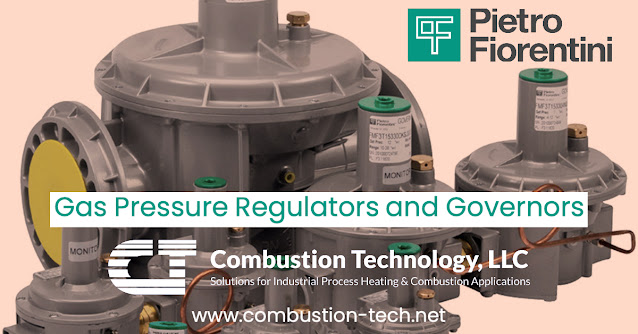
Pietro Fiorentini is a world-leading gas pressure regulator manufacturer of various gas-fired indoor and outdoor equipment. The company also develops technologically cutting-edge products and services for gas distribution.
For more information about Pietro Fiorentini Gas Regulators contact Combustion Technology, LLC. Call 800-327-1831 or visit https://combustion-tech.com.
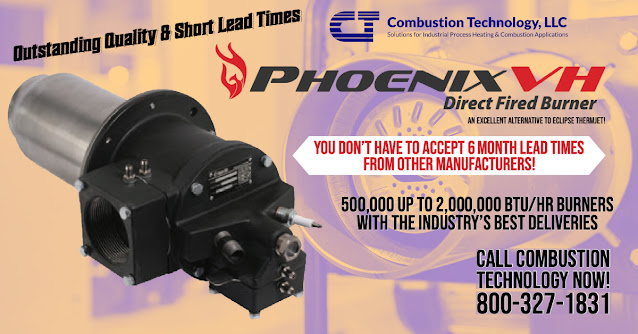
Phoenix Velocity Heat direct fired burners provide exceptional quality and excellent lead times. From 500,00 to 2,000,000 BTU/Hr.
Highest Velocity Flame
The VH produces an intense stream of hot gases to thoroughly penetrate the load and deliver precise temperature uniformity for consistent product quality and system efficiency.
Large Turndown Combined With High Excess Air
A wide turndown range with high excess air means VH delivers high-velocity benefits and efficiencies across its operating range.
Customization With Packaged Convenience
All VH components have been pre-engineered to come together to meet your specific requirements. You choose the capacity, combustor outlet velocity, fuel type, and flame sensing components you need to do the job.
Unparalleled Fuel and Control Convenience
The VH offers the convenience of multi-fuel capability with no nozzle change. Plus, you can use any control methodology; pulse firing, excess air, or on-ratio.
In combustion applications, flame scanners (flame detectors) validate the existence of flame in many hazardous environments and applications, such as hydrogen stations, industrial heating systems, drying systems, industrial gas turbines, combustion chambers, and industrial flares. Their use is critical to ensure that any fuel entering combustion equipment is consumed and not accumulating unburned, presenting a safety hazard.
Unique flame features distinguish the types of flames produced by various burners and compounds. Proper flame detection requires knowledge of the flame itself, its emissive properties, and other features. Apart from temperature, flame scanners and detectors often use radiation and the production of ionized gas molecules to detect the presence of the flame.
Modern scanners detect the presence or absence of flames that emit ultraviolet radiation (UV). Typical fossil fuels which emit UV include natural gas, propane, methane, butane, kerosene, light petroleum distillates, and diesel fuels. For burners firing steam-atomized oil or pulverized coal, use infrared (IR) scanners. In some situations, specific photoelectric detectors may detect a distinctive flicker in any flame invisible to the naked eye.
For over three decades, Combustion Technology has applied flame scanning and detection solutions and equipment for process heating applications. Call them with any flame detection requirement.
The SiemensLFS1 flame switch works in conjunction with a PLC. When the PLC operates as the combustion safeguard, it powers the shutdown valves, perform burner sequencing, monitors interlocks, and controls purging. The LFS1 flame switch communicates the existence of a flame to the PLC through a contact closure. The LFS1's small form conserves valuable panel space.
Flame safeguards have many names. We'll oversimplify and group all of these names to make a point. These names imply a stand-alone device detecting flame, energizing the shutoff valves, monitoring interlocks, and conducting purge. A flame switch is simply a contact. The contact closes when a flame is present and opens when a flame is not present. This opening and closing of the contact let the PLC know the presence of the flame. That's it. The sequencing, powering of the shutoff valves, monitoring, and conducting purge are all done in the PLC. The heart of the flame switch is the FR1 contact closing between terminals 11 and 12. The contact is normally open and closes upon the presence of the flame. The LFS1 takes on the liability of proving the presence of the flame, so the PLC doesn't have to. HR1 contact is an auxiliary contact used for other Siemens products. For a PLC application, SCC instructs to keep the power on terminal 6, resulting in HR1 being closed all the time.
NFPA 86 has criteria for the PLC to be combustion safety. Combustion safety here means the sequencing, powering shutoff valves, and conducting purge. There are two avenues for the PLCs to be the combustion safety: 1) listed for combustion service and 2) not listed for combustion service. The listed PLC is straightforward and designed for combustion safety. The non-listed PLC to be used for combustion safety must meet the criteria of section 8.4.2 in NFPA 86. Third-party certified SIL-2 and restricted access are a few of the requirements for a non-listed PLC. If the PLC is the combustion safety, all you need is the LFS1 flame switch.
Panel space is premium. The LFS1 flame switch is a compact device being 3.5 inches wide and 2.5 inches tall. The small footprint saves on space, especially for multi-burner applications. A mounting base goes with the LFS1, making it 2.5 inches deep.
The LFS1 can report the flame signal strength via a 0-10VDC output, making it helpful to display flame signal strength for the service technician or the operator. The LFS1 can condition the relationship between the microamp flame signal and the 0 to 10VDC signal.
The LFS1 has global approvals, most recently North American approvals of UL, FM, and CSA. The LFS1 is also SIL-3 capable.
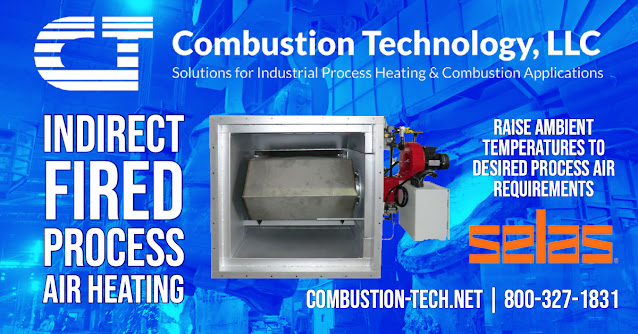
The Selas HEM Indirect Fired Process Air Heater - Designed to fire applications where process air needs to be heated from ambient temperatures to the process plant’s heat requirements.
Selas HEM Indirect Fired Process Air Heater Operating Principles
Burner Assemblies
Each HEM unit is supplied with a pre-packaged and pre-wired burner assembly which includes all of the necessary burner fuel safety valves, pressure switches and automatic ignition and flame safety equipment. Most types of flame failure and automatic ignition control units can be supplied, utilizing flame rectification, photo cell or ultra-violet flame sensing equipment. Air heating burners built to specific applications and country of installation can be fitted. All Burner packages are fully tested and the operation of all components are checked before dispatch from the factory.
Fuel Supply
Burners can be fitted for operation with natural gas, LP gases or light fuel oils. All gas burners are sized to suit an inlet gas pressure of 17.5mbar (natural gas) or 30mbar (LP gases) unless otherwise specified. Burners can be supplied to suit other fuel types and supply pressures.
Direction of Air Flow
Standard HEM process air heaters are arranged to fire horizontally in the direction of air flow from left to right. Heater units can be supplied for firing into duct systems with vertical upwards or downwards air flow. Air flow should be uniform across the air duct, both upstream and downstream of the heater.
Electrical Supply
The HEM units can be fitted with burners to suit almost all types of electrical supply, including all common industrial three phase (50 or 60Hz) power supplies. Burners can be supplied to accommodate electrical voltages for specific applications and destinations.
Features
Fully modulating, indirect firing burner
Pre-packaged and pre-wired burner assembly
High temp limit thermostat or thermocouple unit
High-grade stainless steel combustion chamber
Operates on natural gas, LP or light fuel oil
Benefits
Ideal for shopping centers & commercial premises
Ready for drop-in installation
Protects the heat exchanger from overheat
Durable construction for long life
Installation not dependent on single fuel source
For more information about Selas products in the Pacific Northwest, contact Combustion Technology, LLC. Call 800-327-1831 or visithttps://combustion-tech.net.